
How Does Manual Lymphatic Drainage Differ from Regular Massage?
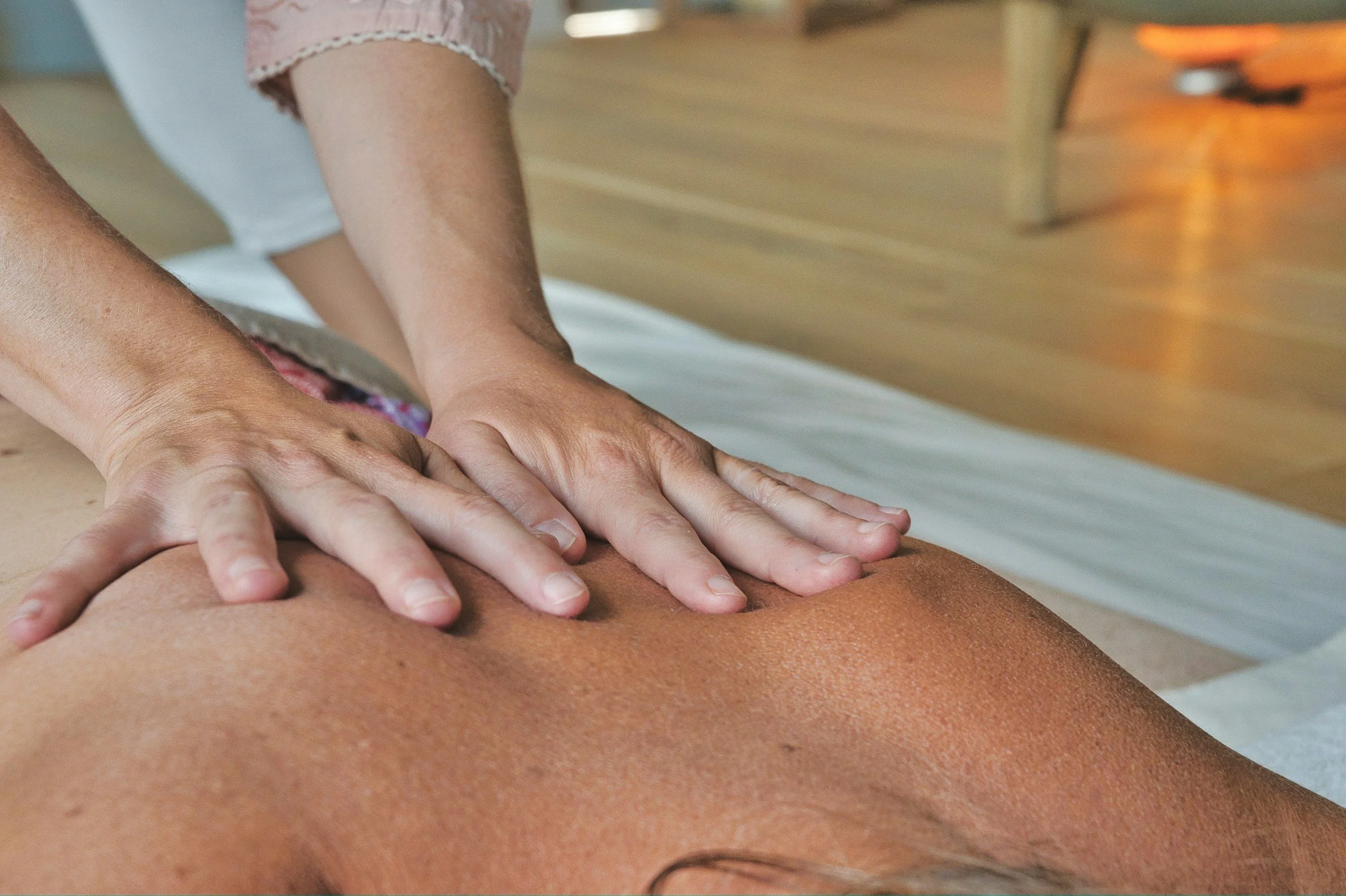
If you've ever looked into lymphatic drainage and thought, isn't that just a lighter version of a regular massage? — you're not alone. It's one of the most common misconceptions I hear in my practice here in Greenville. And I get it. Both involve hands. Both happen on a table. Both can leave you feeling more relaxed than when you walked in.
But under the surface, they are doing completely different things in your body.
Understanding that difference isn't just interesting from a wellness nerd perspective — it's genuinely useful. Because when you know what each modality is actually designed to do, you can make a much smarter choice about what your body actually needs right now.
Let's break it down.
First — What Is Regular Massage Actually Doing?
When most people think of massage, they're thinking of Swedish massage or deep tissue work. These modalities are designed to work on your muscles, tendons, and fascia — the soft tissue structures beneath your skin. The therapist uses pressure, kneading, stretching, and friction to release muscular tension, improve range of motion, increase local circulation, and promote relaxation.
The pressure in regular massage is moderate to firm and intentionally penetrates into deeper layers of tissue. It's what you want when your shoulders are knotted from stress, when your lower back is screaming after a long week, or when you need to unwind physically and emotionally. Regular massage is excellent at what it does. It's just not doing what MLD does.
So What Is MLD Actually Doing?
Manual Lymphatic Drainage was developed by Dr. Emil Vodder and his wife Estrid in 1936 in Paris, originally for the treatment of swollen lymph nodes. It is a light, skin-stretching technique specifically focused on the lymph vessels to help the flow of lymphatic fluid — and it should not be confused with traditional massage. Paulcdillonmd
Where regular massage works on muscles, MLD works on an entirely different system — your lymphatic system. This is the network of vessels, nodes, and fluid running just beneath your skin that is responsible for collecting excess fluid, filtering waste, and supporting your immune function. When lymphatic flow is sluggish or disrupted — due to surgery, illness, injury, pregnancy, or chronic inflammation — fluid accumulates in the tissue and the whole body starts to feel it.
MLD uses slow, rhythmic, feather-light strokes to gently stretch the skin and encourage lymphatic vessels to open, move fluid toward functioning lymph nodes, and clear the system. Unlike regular massage where clients can request work almost anywhere in any order with varying pressures, MLD follows a specific sequence with minimal pressure that cannot be changed without clinical reasoning. The protocol matters as much as the touch.
The Three Biggest Differences
1. Pressure — lighter than you'd ever expect
This is usually the first thing clients notice. MLD uses almost no pressure by regular massage standards. We're talking the weight of a nickel on your skin. In MLD, the movement of the hands is passive and repetitive, using mainly the fingers in a soft, fluid way — always moving in one direction. In regular massage, hands are active, fingers engaged, wrists firm — holding, stretching, compressing.
That feather-light touch isn't a limitation. It's the entire point. The lymphatic capillaries we're targeting are so close to the skin's surface that deep pressure actually bypasses them entirely — and can even compress them, working against the goal. Gentle is what works here.
2. Target system — fluid vs. muscle
Regular massage targets your musculoskeletal system. MLD targets your lymphatic system. These are two separate anatomical structures requiring two completely different approaches. Trying to drain your lymphatic system with deep tissue technique is a bit like trying to water a seedling with a fire hose — the tool doesn't match the job.
MLD is the right tool when your body is dealing with swelling, post-surgical fluid retention, puffiness, sluggish immunity, or that heavy waterlogged feeling. Regular massage is the right tool when you're dealing with muscular tension, restricted movement, knots, or general physical stress.
3. Who it's best suited for
🌿 MLD is ideal for: post-surgical recovery, lymphedema management, pregnancy swelling, chronic inflammation, facial puffiness, immune support, and anyone who feels bloated, heavy, or stuck in their body
🌿 Regular massage is ideal for: muscle tension, back and neck pain, post-workout recovery, stress relief, restricted range of motion, and general relaxation
It's also worth knowing that MLD can be performed on clients who would be contraindicated for regular massage because of swelling — for example, a client with an acutely swollen ankle cannot receive massage directly on that area, but MLD can be safely applied to reduce that fluid. The two modalities can actually complement each other beautifully when used thoughtfully.
What Does MLD Feel Like Compared to Regular Massage?
First-timers are often surprised. If you come in expecting the satisfying pressure of a deep tissue session, MLD will feel almost impossibly gentle at first. Some people even wonder in the first few minutes if anything is happening at all.
And then, usually about 20 minutes in, something shifts.
The body begins to let go in a different way — not muscular release, but a kind of systemic lightness. Many clients describe it as feeling like they've been wrung out gently, like water finding its way downhill. After a session, it's common to notice you need to use the bathroom more than usual — that's your body clearing the fluid that's been moved. It's a good sign.
After MLD, clients often report feeling lighter, less swollen, and more deeply relaxed. After regular massage, clients typically experience muscle relief, emotional calm, and improved flexibility. Both are real and valuable outcomes — just from completely different mechanisms. Blys
So Which One Do You Need?
Here's the simplest way I put it to new clients: if your body feels tense, you probably want massage. If your body feels heavy or stuck, you probably want MLD. And if you're recovering from surgery, dealing with chronic inflammation, or just curious what your body feels like when your lymphatic system is actually flowing — come try MLD and find out for yourself.
If you're ready to go deeper, my post on how MLD supports post-surgical recovery is a great next read. And if you're thinking about booking your first session, here's everything to know about how to prepare so you get the most out of your time on the table.
✨ Curious what MLD could do for your body?
👉 Book your session at Soul Vibration Wellness: www.soulvibrationwellness.com/book
👉 Questions? Call or text: 802-858-5299
👉 Know someone who's been confused about what lymphatic drainage actually is? Send this their way 💧
Your body already knows how to heal. Sometimes it just needs the right support. 🧡
Serving clients in Greenville, SC and throughout the Upstate.
Take good care,
Drea ❤️
Soul Vibration Wellness | Massage Therapist · Yoga Instructor · Reiki Practitioner