
My Top 5 Favorite Herbs For Spring Renewal
My 5 Fav Herbs for Spring Detox and Seasonal Allergies
Every spring without fail, I find myself crouching down in a field somewhere on the outskirts of the city, fingers in the dirt, pulling up dandelion greens and roots with the kind of satisfaction that is hard to explain to someone who has never foraged wild food. There is something deeply grounding about harvesting your medicine straight from the earth — something our ancestors did without a second thought and most of us have completely forgotten how to do.
Herbs have been central to my wellness practice for years. I use them as teas, tinctures, and in cooking, and I weave them into conversations with clients whenever it feels right. And spring, more than any other season, is when I reach for specific plants that help the body do what it is already trying to do — clear out winter's heaviness, calm an overactive immune system, and restore a sense of lightness and flow.
If you've been struggling with seasonal allergies, that puffy post-winter sluggishness, or just a general sense that your body needs a reset — these five herbs are worth knowing about. Here's what I use, how I use them, and what the research actually says.
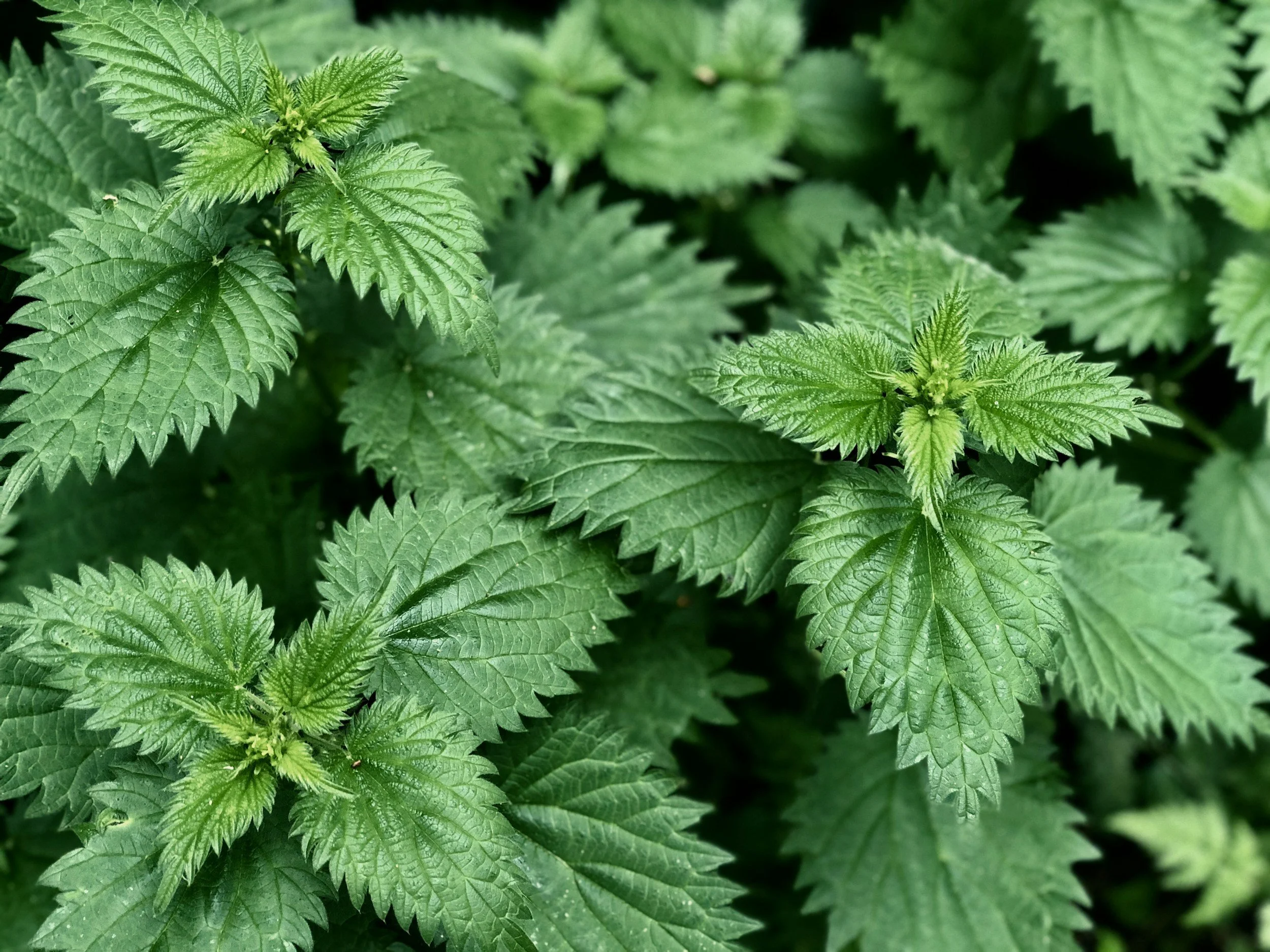
🌿 1. Nettle (Urtica dioica)
If I had to pick just one herb for spring, nettle would be it. This is the herb I reach for first when allergy season hits, and for good reason — it is one of the most well-researched natural antihistamines we have.
A study published in Planta Medica found that freeze-dried stinging nettle significantly reduced allergic rhinitis symptoms, with participants reporting relief from sneezing, itching, and nasal congestion. Researchers believe nettle works by inhibiting the production of prostaglandins and histamines — the inflammatory compounds responsible for that miserable itchy-eye, runny-nose response to pollen.
Beyond allergies, nettle is extraordinarily nutrient-dense. It is packed with iron, magnesium, calcium, vitamins A, C, and K, and a range of antioxidants that support overall detoxification and immune function. I think of it as a multivitamin that grows wild.
How to use it: Nettle tea is the easiest entry point — steep dried nettle leaves for 10 to 15 minutes for a rich, mineral-forward brew. You can also find it as a tincture or in capsule form. If you're feeling adventurous, young nettle leaves can be cooked like spinach — the sting disappears completely with heat — and they make a beautiful spring soup or sauté.
🌿 2. Dandelion (Taraxacum officinale)
Here's the thing about dandelion — most people are out there paying lawn services to kill the very plant that could be supporting their liver and lymphatic system. Every spring I forage wild dandelion here in South Carolina and I genuinely look forward to it. The whole plant is useful: the leaves, the roots, and even the flowers.
Dandelion is one of the most powerful liver tonics in the herbal world. Research published in Evidence-Based Complementary and Alternative Medicine found that dandelion extract promotes bile production and flow, which directly supports the liver's ability to process and eliminate waste. In spring — when the liver is working overtime to clear winter's accumulation — this is exactly the kind of support it needs.
Dandelion root is also a prebiotic, feeding the beneficial bacteria in your gut and supporting the microbiome. And dandelion leaf is a natural diuretic, helping the kidneys flush excess fluid and toxins — without depleting potassium the way pharmaceutical diuretics can, because dandelion leaf is itself rich in potassium.
For allergy sufferers specifically, dandelion's anti-inflammatory properties help calm the immune overreaction that drives seasonal symptoms. It won't replace nettle for acute allergy relief, but as a foundational spring herb it is hard to beat.
How to use it: I make dandelion root tea through the winter and into spring — it has a rich, slightly bitter, almost coffee-like flavor that I genuinely love. Young dandelion leaves can be added to salads or sautéed with garlic and olive oil. The flowers can be eaten raw, made into dandelion honey, or infused into oil.
🌿 3. Burdock Root (Arctium lappa)
Burdock root is the quiet powerhouse of the spring herb world — less glamorous than some of its counterparts but deeply effective, particularly for detoxification and skin health. It is a staple in Traditional Chinese Medicine and Japanese cuisine (where it's known as gobo) and one of my personal favorites for spring.
Burdock is what herbalists call an alterative — a plant that gradually improves the function of the body's elimination channels, including the liver, kidneys, lymphatic system, and skin. Research has identified several active compounds in burdock root, including inulin (a prebiotic fiber), arctiin, and chlorogenic acid, all of which have demonstrated antioxidant and anti-inflammatory effects in studies.
A 2011 study published in the International Journal of Molecular Sciences found that burdock root extract significantly reduced inflammatory markers and oxidative stress — two key drivers of both allergic responses and the general sluggishness that comes with a congested detoxification system.
For clients dealing with skin flare-ups in spring — acne, eczema, or general dullness — burdock is often the first herb I point them toward. The skin is an elimination organ, and when the liver and lymphatic system are congested, the skin often bears the burden. Burdock helps move things along at the root.
How to use it: Burdock root tea is earthy and slightly sweet — lovely on its own or combined with dandelion root. It is also delicious cooked: slice it thinly and stir fry it, add it to soups, or roast it like a root vegetable. You can find it fresh in many Asian grocery stores and dried in most health food stores.
🌿 4. Licorice Root (Glycyrrhiza glabra)
Licorice root is one of the most widely researched herbs in the world and one that I come back to again and again — particularly for its remarkable ability to calm inflammation and support the adrenal glands after a long, stressful winter.
Glycyrrhizin, the primary active compound in licorice root, has been shown in numerous studies to have potent anti-inflammatory and antiviral properties. For allergy sufferers, its ability to reduce inflammation in the respiratory tract makes it particularly valuable — it has long been used in herbal medicine to soothe irritated mucous membranes, ease congestion, and calm a reactive immune system.
Licorice root also supports the adrenal glands by mildly inhibiting the breakdown of cortisol, which helps buffer the body against the effects of chronic stress. After winter — when many of us have been running on less light, less movement, and more stress — this adrenal support can make a noticeable difference in energy and resilience.
One important note: licorice root is not appropriate for everyone. People with high blood pressure, kidney disease, or those who are pregnant should avoid it or consult with a healthcare provider before using it, as glycyrrhizin can raise blood pressure with long-term use. As with all herbs, dose and duration matter.
How to use it: Licorice root tea is naturally sweet and warming — it is lovely combined with ginger or peppermint for a spring digestive blend. It is also widely available as a tincture and in capsule form. I tend to use it in shorter cycles — a few weeks on, a break, then back again.
🌿 5. Elderflower (Sambucus nigra)
You may know elderberry for its immune-boosting reputation in winter — but elderflower, the blossom of the same plant, is a different and equally remarkable medicine that is perfectly timed for spring.
Elderflower has a long tradition of use for seasonal allergies and upper respiratory complaints. It works as a gentle decongestant and anti-catarrhal — meaning it helps reduce excess mucus production and clear the sinuses. For anyone who spends spring sneezing and reaching for tissues, elderflower tea is a gentle, effective, and delicious place to start.
Research published in Phytochemistry has identified flavonoids in elderflower — particularly quercetin and rutin — that have demonstrated antihistamine and anti-inflammatory effects. Quercetin in particular has been shown to stabilize mast cells, the immune cells responsible for releasing histamine in response to allergens.
Elderflower also supports lymphatic flow and has been traditionally used to support the body during illness and seasonal transitions — making it a natural fit for a spring detox protocol.
How to use it: Elderflower tea is light, floral, and genuinely lovely — one of my favorite spring brews. You can find dried elderflower at health food stores or online. Elderflower cordial is a traditional European preparation that makes a beautiful drink diluted with sparkling water. If you ever come across elder trees in bloom — those clusters of tiny white flowers are unmistakable — the blossoms can be harvested, dried, and used all year long.
A Few Things Worth Knowing
Herbs are powerful — that's the point. But powerful means they deserve the same respect you would give any other medicine. A few things to keep in mind:
✅ Quality matters enormously. Look for organic, responsibly sourced herbs from reputable suppliers. What's on the label isn't always what's in the bag with low-quality products.
✅ Herbs can interact with medications. If you are taking any prescription medications, check with your doctor or a qualified herbalist before adding new herbs to your routine — particularly licorice root, dandelion, and nettle, which can affect blood pressure, blood sugar, and blood thinning medications.
✅ Start slowly. Introduce one herb at a time so you can notice how your body responds.
✅ Consistency is key. Most herbs work best with regular, sustained use rather than occasional large doses.
Spring Is the Season for Plant Medicine
There is a reason traditional healing systems around the world — from Ayurveda to Traditional Chinese Medicine to European folk herbalism — all emphasize spring as the season for cleansing and renewal. The plants that emerge in spring are precisely the ones the body needs most: bitter, moving, anti-inflammatory, and deeply nourishing.
Whether you're brewing a pot of nettle tea, tossing dandelion greens into a salad, or sipping licorice root by the window while the birds sing outside — you are participating in a tradition of plant medicine that stretches back thousands of years. I find that pretty extraordinary.
If you want to talk through how to incorporate herbal support into your overall spring wellness routine — alongside bodywork, movement, and the other pillars we've been exploring in this series — I'm always happy to chat. Reach out anytime.
✨ Ready to support your spring wellness from the inside out?
👉 Book a session at Soul Vibration Wellness
👉 Questions? Get in touch - 802-858-5299
👉 Share this post with someone who's been suffering through allergy season 🌿
Here's to the medicine that grows beneath our feet. 🧡